Platform-Specific Service for Cummins Engines
Cummins diesel service in Great Falls for trucks and equipment running Cummins powerplants across multiple generations
Cummins platforms dominate heavy truck and agricultural equipment fleets across Great Falls, and each generation of Cummins engines—from mechanically controlled inline-six blocks to current common-rail systems—requires different diagnostic approaches and tuning protocols. The fuel delivery architecture, turbocharger configuration, and emissions control systems vary significantly between engine families, and generic scan tools miss platform-specific fault codes or performance parameters. Up In Smoke Diesel uses Cummins-native scanning equipment and ECU tuning methods designed for the specific engine family in your truck, whether that's a 5.9-liter, 6.7-liter, or older mechanical platform.
Service includes diagnostics that read proprietary Cummins fault codes, fuel-system testing for injector flow balance and rail pressure consistency, turbocharger boost verification, and performance baseline testing that compares current output against factory specifications. OEM parts sourcing maintains compatibility with engine control strategies, and repairs follow Cummins service protocols rather than generic diesel procedures that may not account for platform-specific wear patterns or calibration requirements.
Schedule a Cummins diagnostic session to establish your engine's current performance baseline and identify any emerging issues before they affect operation.
What Proper Cummins Service Requires
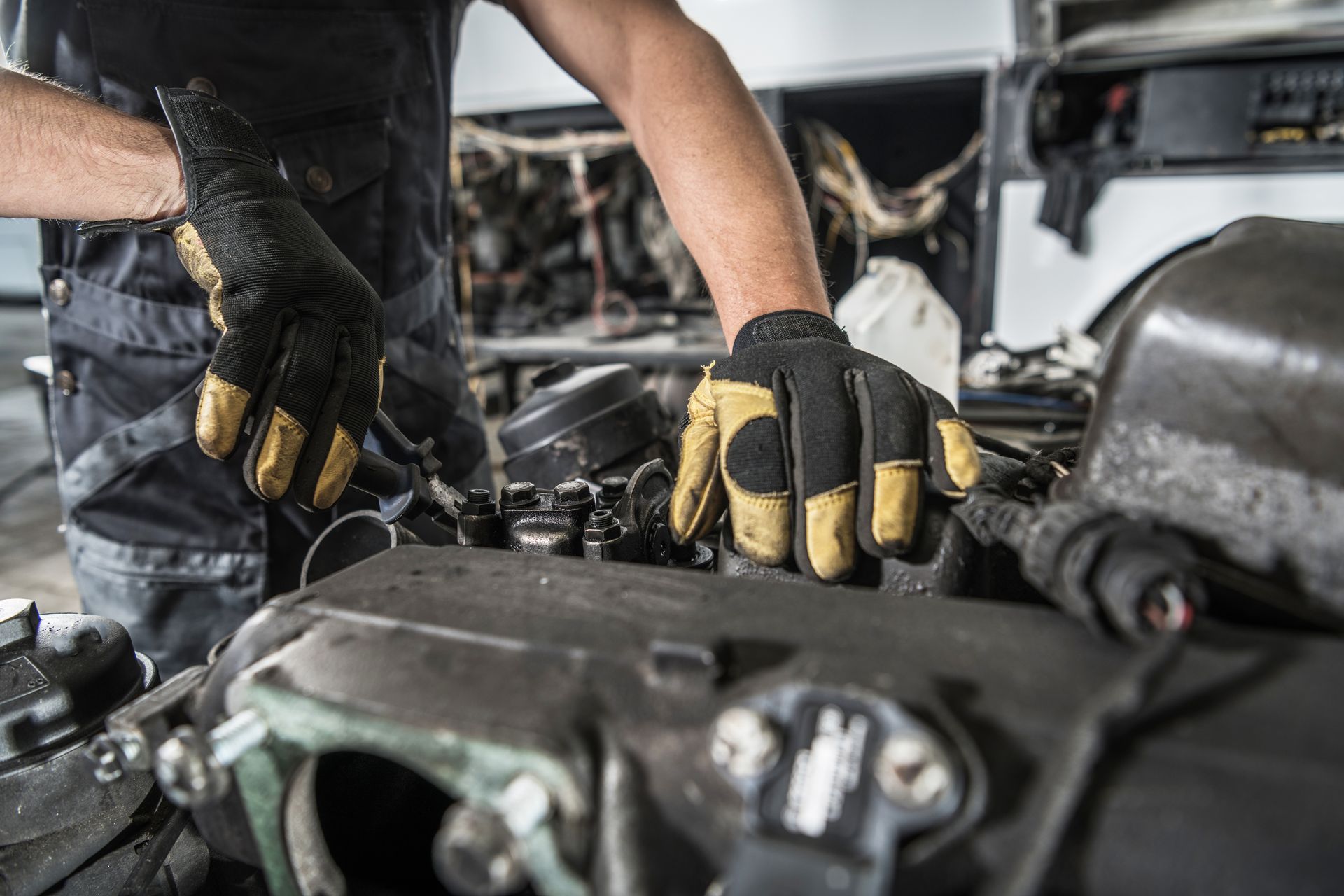
Cummins engines rely on precise fuel delivery timing and turbocharger control managed by the ECU, and service procedures must verify that sensors, actuators, and control modules are operating within the tolerances Cummins specifies for each engine family. Injector testing measures spray pattern and flow rate, fuel-rail pressure testing confirms pump output and pressure regulation, and turbocharger actuator position is verified against commanded values to ensure boost control remains accurate across the engine's operating range.
Trucks see restored throttle response, smoother idle quality, and more consistent power delivery across the RPM range once fuel-system calibration and turbo operation are brought back to specification, and operators notice improved fuel economy when injectors deliver the precise fuel quantity the ECU commands. Documentation from baseline testing provides a reference point for future service and helps identify gradual performance degradation before it becomes noticeable during normal operation.
Service options include OEM-baseline maintenance that keeps the engine running to factory specifications, performance tuning that adjusts fuel delivery and turbo boost for increased output, and component replacement when wear testing shows injectors or pumps falling outside acceptable flow tolerances. Some operators choose tuning for towing or hauling applications, while others prioritize fuel efficiency or extended service intervals depending on how the truck is used daily.
Questions About Cummins Service
Cummins engines share common architecture across many applications, but service requirements differ based on engine generation, emissions equipment, and how the engine is used, and understanding those differences helps operators make informed decisions about maintenance and repairs.
What makes Cummins service different from generic diesel service?
Cummins platforms use proprietary ECU programming, fuel-system architecture, and emissions control strategies that require manufacturer-specific diagnostic tools and calibration data to service correctly, and generic scan tools cannot access the full range of engine parameters or perform calibration procedures that Cummins service protocols require.
How does service differ between older and newer Cummins engines?
Older mechanical and early electronic Cummins engines use simpler fuel delivery with fewer emissions controls, while current common-rail engines incorporate high-pressure fuel systems, variable-geometry turbochargers, and multi-stage emissions treatment that require different diagnostic procedures and more precise calibration.
Why does injector testing matter for Cummins engines?
Cummins common-rail injectors operate at extremely high pressure and must deliver fuel in precise quantities and timing to maintain performance and emissions compliance, and even small deviations in flow rate or spray pattern cause rough running, increased fuel consumption, or excessive exhaust smoke.
When should I consider performance tuning versus standard service?
Performance tuning adjusts fuel delivery and boost pressure beyond factory settings to increase horsepower and torque for towing or hauling, while standard service maintains OEM specifications; tuning is appropriate when your truck regularly operates near its load capacity, but it may affect warranty coverage and emissions compliance depending on how it's implemented.
What documentation do I receive after Cummins service in Great Falls?
Service includes a baseline report showing current fuel pressure, injector flow rates, turbo boost levels, and any fault codes retrieved, along with a record of parts replaced and calibration adjustments made, providing a reference for future diagnostics and service planning.
Up In Smoke Diesel maintains the equipment and platform knowledge needed to service Cummins engines correctly across multiple generations. Arrange an evaluation to determine what service or calibration adjustments your Cummins engine currently needs based on its performance metrics and operating history.